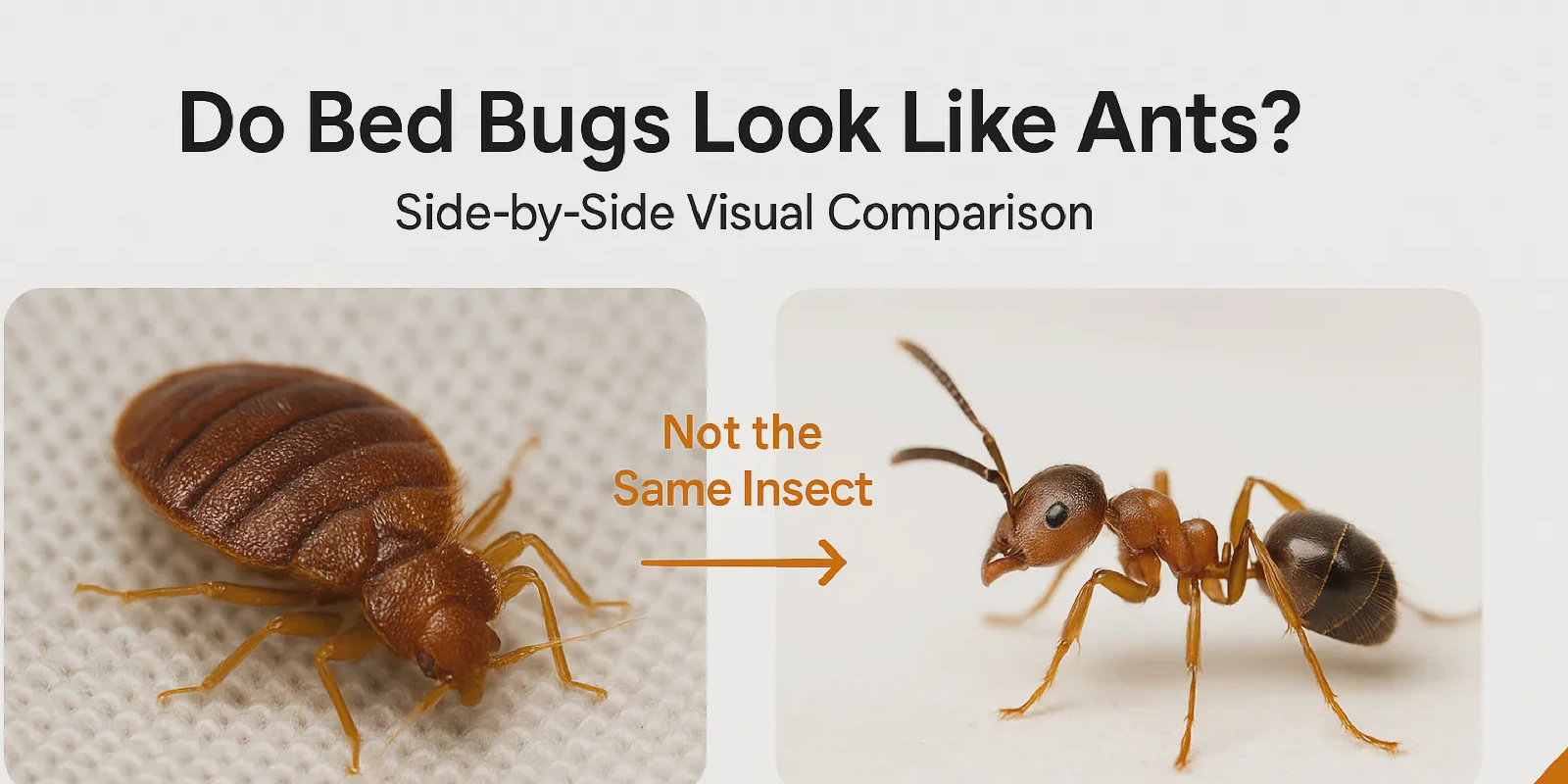
Is That a Bed Bug or an Ant? Upload a Photo for Instant Answer
Many people mistake ants for bed bugs — especially when they look small, brown, or red. Before you start worrying about an infestation, upload a photo below and get instant confirmation.
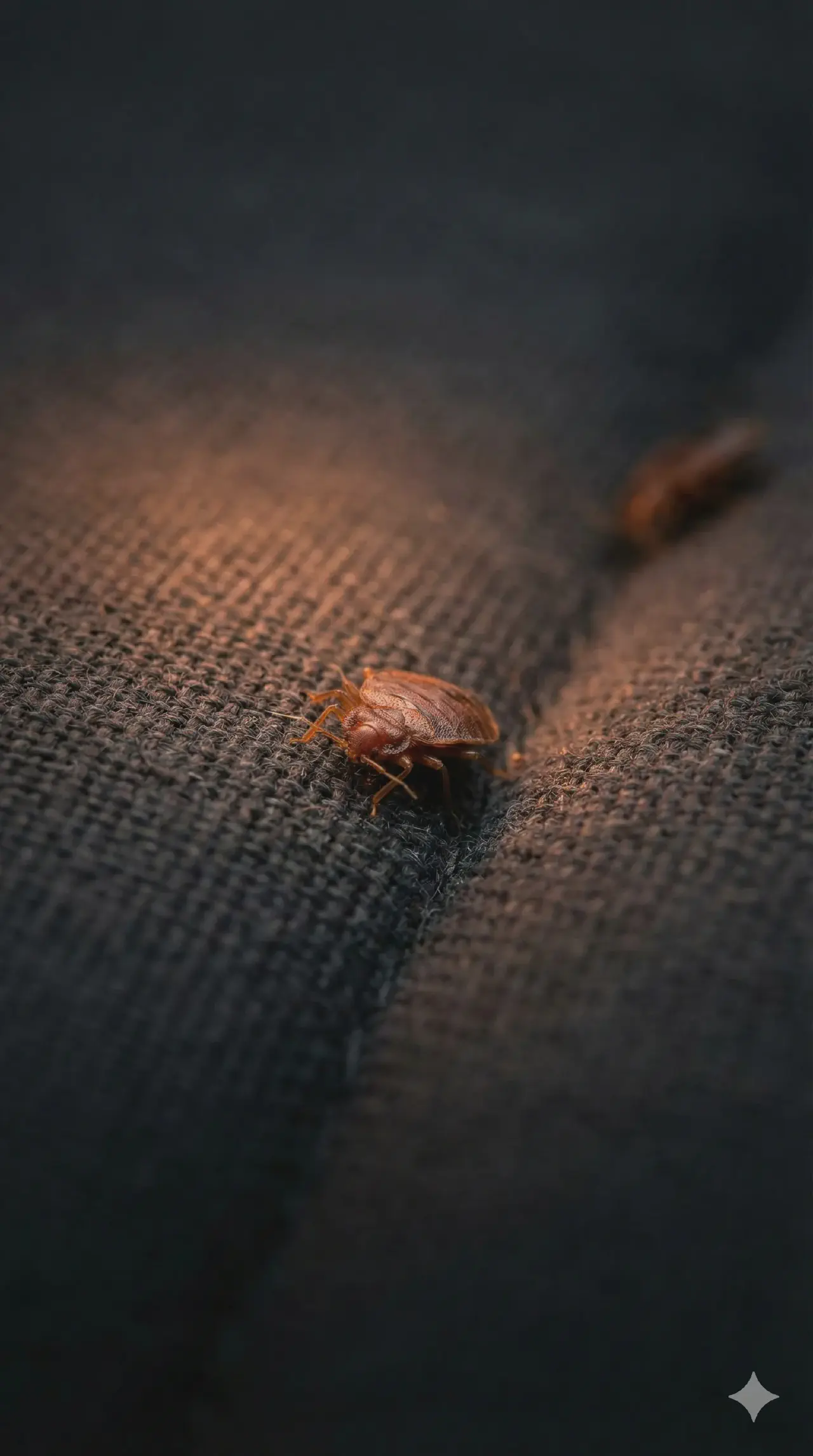
Think You Spotted a Bed Bug?
Upload a close-up photo—AI confirms if it’s a bed bug or an ant in under a minute.
Do bed bugs look like ants? Learn how to tell them apart and avoid mistaking ants for a potential infestation.
If you’ve spotted a small insect and aren’t sure whether it’s a bed bug or just an ant, this guide will help you identify the difference — plus what signs to look for on your sheets, skin, and furniture.
Table of Contents
- Do Bed Bugs Look Like Ants?
- Why People Confuse Them
- How Bed Bugs Actually Look
- How Ants Are Different
- Do Bed Bug Bites Look Like Ant Bites?
- How to Tell the Difference
- FAQ
- Summary
Do Bed Bugs Look Like Ants?
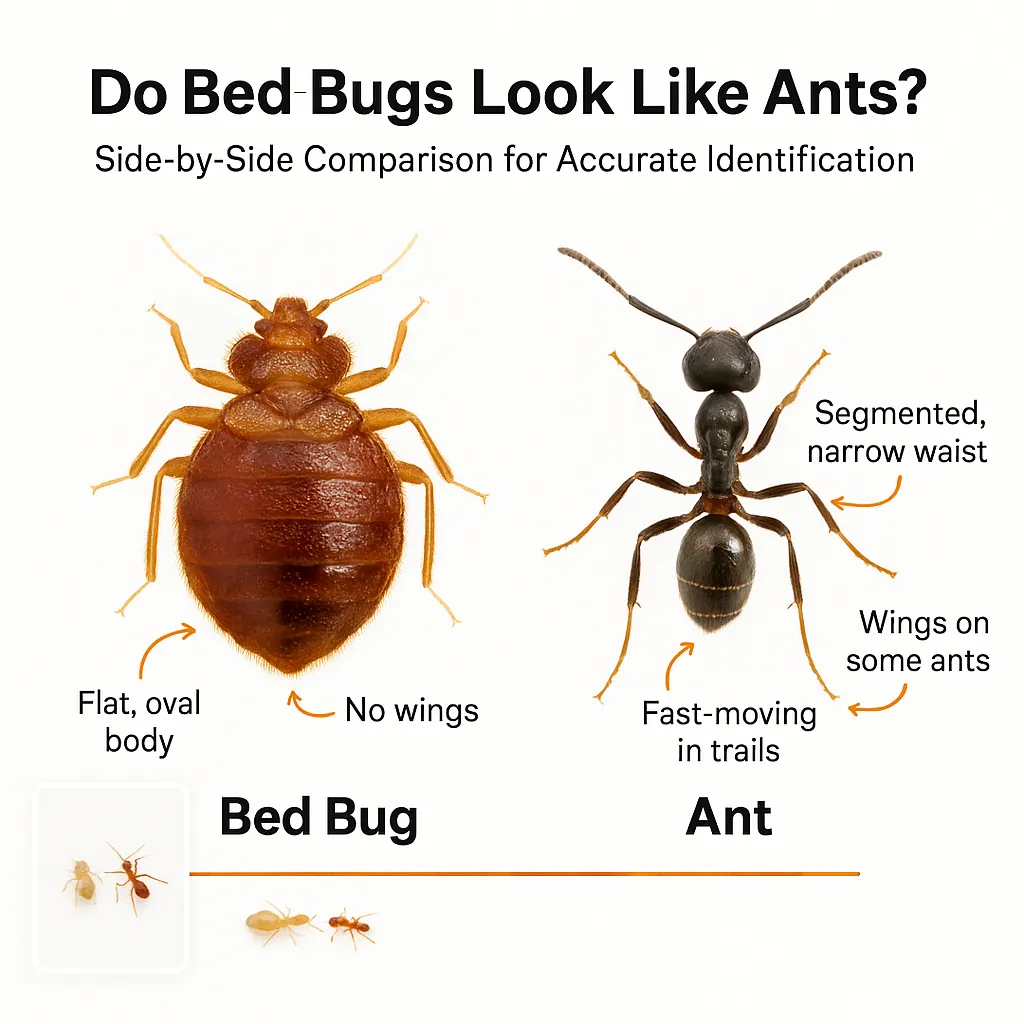
At first glance, bed bugs can resemble ants, especially to the untrained eye. They’re both small, mobile, and may appear reddish or brown. But if you’re asking “do bed bugs look like ants?” — the answer is mostly no. They are different in shape, behavior, and habitat.
Knowing the key differences helps prevent misidentification and ensures you take the right action before a potential infestation gets worse.
Quick Facts: Bed Bugs vs Ants
- Body shape: Bed bugs are flat & oval — ants have a narrow waist.
- Color: Bed bugs reddish-brown, ants vary (black, red, brown).
- Movement: Bed bugs crawl slowly; ants move fast, often in trails.
- Bites: Bed bug bites in lines/clusters; ant bites are isolated or stingy.
- Habitat: Bed bugs hide in beds/furniture; ants near food & walls.
Why People Confuse Them
People often confuse bed bugs with ants for a few understandable reasons:
- Size: Both are typically small (5–7mm for adult bed bugs; similar for many ants).
- Color: Fed bed bugs can appear reddish, just like some ant species.
- Movement: Both crawl quickly, especially when disturbed.
- Setting: Both may be seen indoors, especially around baseboards or furniture.
Where it gets tricky is with early-stage bed bugs. Many ask: do baby bed bugs look like ants? Nymphs can appear whitish or translucent before feeding, then turn bright red, which can look like small red ants. But the resemblance fades quickly with closer inspection. If you’re not sure what you’re seeing, it helps to understand what color are bed bugs across all life stages.
Where it gets tricky is with early-stage bed bugs. Many ask: do baby bed bugs look like ants? Nymphs can appear whitish or translucent before feeding, then turn bright red, which can look like small red ants. But the resemblance fades quickly with closer inspection.
For a full guide with close-up photos, size charts, and color changes across all 5 nymph stages, see our Baby Bed Bugs Identification Guide — it’s the fastest way to tell tiny bed bugs from ants.
Baby Bed Bug or Ant?
Upload a photo—our AI spots early-stage bed bugs that often look like tiny ants.
How Bed Bugs Actually Look
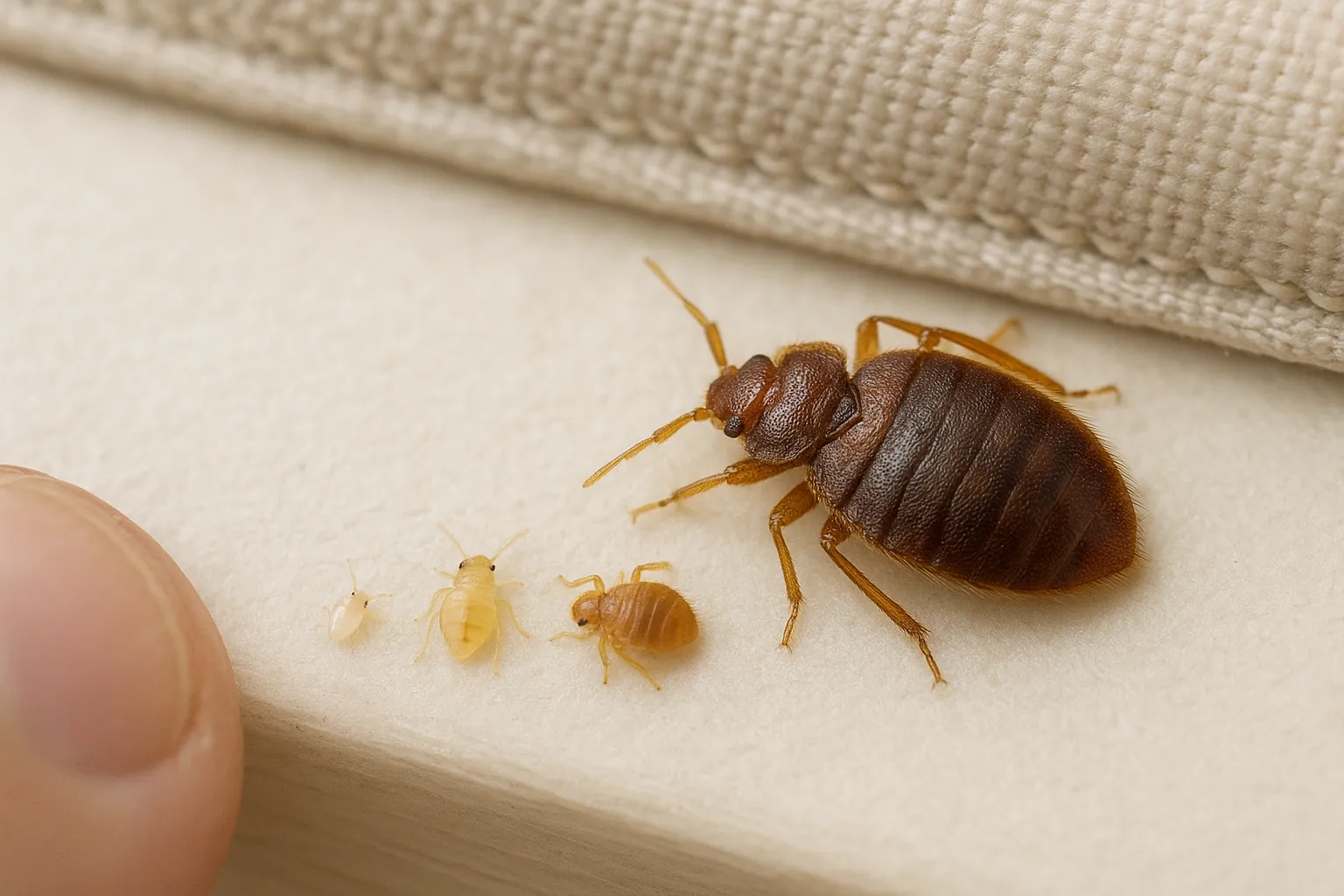
To identify a bed bug accurately, focus on these physical traits:
- Shape: Flat, oval, and broad-bodied
- Color: Mahogany brown when unfed; reddish when fed
- Size: Adults are about 5–7mm; nymphs are smaller and lighter
- Body segments: Uniform body with no pinched waist
- Behavior: Hide in mattresses, cracks, or furniture seams
For a more detailed comparison, check out our expert guide on How to Identify Bed Bugs in Your Home.
Want to see exactly what bed bugs look like at each stage — up close? Here’s how bed bugs appear to the human eye
How Ants Are Different
Ants are a diverse group of insects with traits that clearly set them apart:
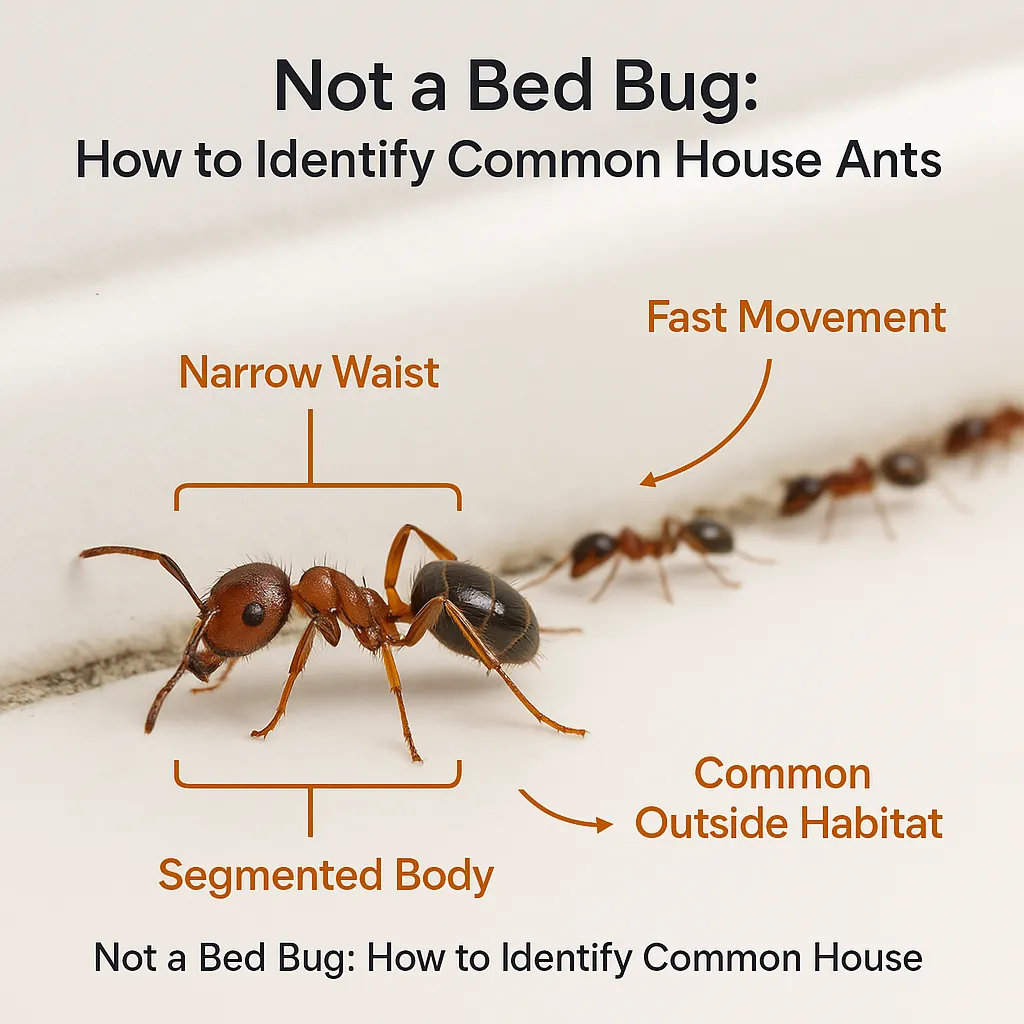
- Shape: Narrow-waisted with distinct head, thorax, and abdomen
- Color: Can be black, brown, or red depending on the species
- Movement: More active and faster than bed bugs; often travel in trails
- Habitat: Found near food, walls, or soil — not in bedding
If you’re seeing something segmented, quick-moving, and following a line, it’s likely an ant — not a bed bug.
Ant or Bed Bug? Know for Sure
Upload a bug photo—AI compares it to verified ant and bed bug images.
Do Bed Bug Bites Look Like Ant Bites?
Bite marks are another source of confusion. Many wonder: do bed bug bites look like ant bites? Sometimes, yes — but here’s how to tell:
- Bed bug bites often appear in clusters or straight lines. They may cause red, itchy welts.
- Ant bites are usually isolated. Some ants (like fire ants) cause painful stings that swell or blister.
It’s easy to misread bites. If you’re waking up with new marks, check for other signs like fecal spots or blood smears — or try our detection tool to be sure.
If you’re unsure about skin reactions, don’t guess — check our full comparison guide: Do Bed Bug Bites Look Like Ant Bites? for side-by-side photos, bite pattern analysis, and expert insights.
Wondering What Bit You?
Upload a bite photo or bug photo—AI helps confirm the culprit and next steps.
How to Tell the Difference
Here’s a side-by-side comparison:
Need help confirming what you’re seeing?
Explore our full bed bug inspection checklist
| Feature | Bed Bugs | Ants |
|---|---|---|
| Body shape | Oval, flat, no waist | Segmented, with a narrow waist |
| Color | Reddish-brown, red after feeding | Black, red, or brown (varies) |
| Movement | Slow crawlers, hide during the day | Fast movers, often travel in lines |
| Wings | None | Some species have wings |
| Habitat | Beds, couches, cracks, furniture | Kitchens, baseboards, outdoor areas |
Think you’ve found bed bugs? Upload a photo with our free detection tool. If confirmed, we’ll email you a personalized treatment plan — complete with everything you need to eliminate them.**
Do bed bugs look like little ants?
Do bed bugs look like red ants?
Do bed bug bites look like ant bites?
Do baby bed bugs look like ants?
Can bed bugs be mistaken for fire ants?
Do bed bugs have wings like some ants?
How can I quickly tell bed bugs from ants?
Still wondering how long bed bugs might stick around even if you haven’t seen them lately?
Learn how long bed bugs can live without a host — survival times may surprise you.
Ready to Upload Your Photo?
Upload any suspicious photos—get definitive identification results via email.
Summary
So, do bed bugs look like ants? While they might appear similar at first glance — especially in size and color — bed bugs are quite distinct when viewed closely. They are flatter, slower, and lack the segmented waist that all ants have. Bite patterns and behavior also help tell them apart.
If you’re unsure, don’t guess. Use our free bed bug detection tool to upload a photo and get quick answers. Proper ID is the first step to peace of mind — and stopping a problem before it spreads.
- Bed Bug Shells: Complete Visual Identification Guide + Free Photo Analysis
- Can You See Bed Bugs With the Human Eye? Find Out Instantly
- How Long Can Bed Bugs Live Without a Host? Complete Survival Timeline Guide
- Is That a Baby Bed Bug? Get Instant AI Photo ID Free
- What Color Are Bed Bugs? Color by Stage + After Feeding (Visual Guide)