Bed Bug Casings Found? What They Reveal About Active Infestations
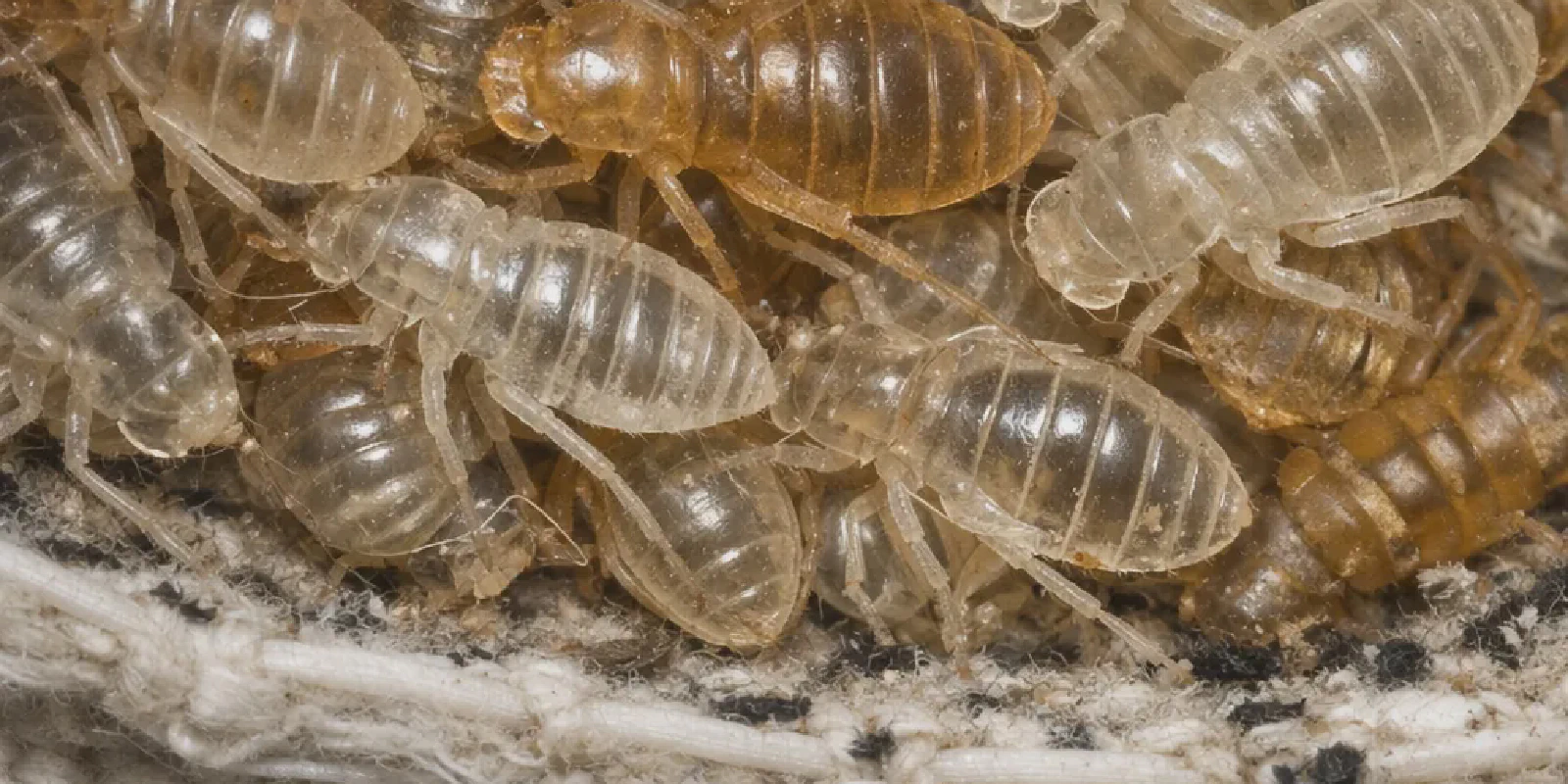
Bed bug casings are the translucent, hollow exoskeletons that bed bugs shed as they grow through their five nymphal stages before reaching adulthood. These papery shells are one of the most reliable signs of bed bug activity because they indicate active molting and population growth. Finding casings is significant because bed bugs must feed before each molt, meaning these shells confirm that bugs are regularly feeding nearby. Professional pest inspectors specifically search for these casings during assessments, as their presence, quantity, and condition provide crucial timeline and severity information that you can use to evaluate your situation immediately.
What Bed Bug Casings Actually Are
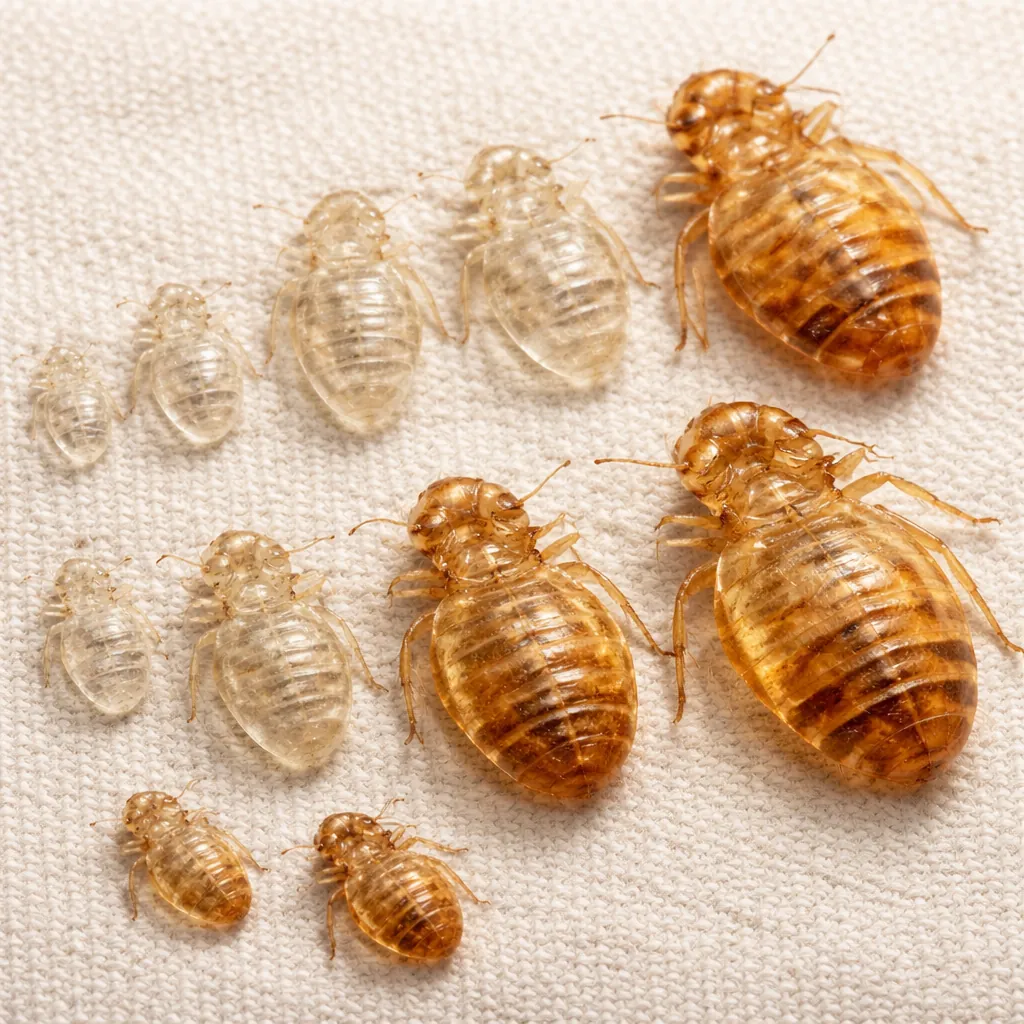
Bed bug casings are complete molted exoskeletons that retain the exact shape and size of the nymph that shed them, ranging from 1.5mm (first instar nymphs) to 4.5mm (fifth instar nymphs just before adulthood). These casings appear translucent to light tan in color, becoming more amber-toned as nymphs mature through stages. The shells are remarkably thin—almost paper-like in texture—and you can often see light through them when held up. Each casing displays characteristic features including six visible legs, segmented body structure, and sometimes even antenna outlines, though they’re completely hollow and weightless. Fresh casings appear slightly glossy and intact, while older ones become brittle, fragment easily, and accumulate dust, making them appear darker gray or brown.
The location patterns of casings reveal feeding zones. You’ll typically find clusters of multiple casings concentrated within 5-8 feet of sleeping areas—inside mattress seams, box spring fabric tears, headboard crevices, and behind nightstands. A single molting site might contain 20-30+ casings of varying sizes, indicating that multiple nymphs of different ages are developing in that harborage. The presence of both tiny (1-2mm) and larger (4-5mm) casings together signals an established, reproducing population spanning several weeks of activity. Casings found during daylight hours in exposed locations often indicate severe overcrowding, as bugs are being forced into less-optimal hiding spots.
Have Evidence Photos?
Found translucent shells matching these size ranges (1.5-4.5mm) and segmented body structures in your sleeping area? Upload close-up photos of the casings, their location, and any clusters you've discovered—confirm whether these molted exoskeletons indicate active bed bug development before taking action.
Understanding What Casings Reveal About Severity
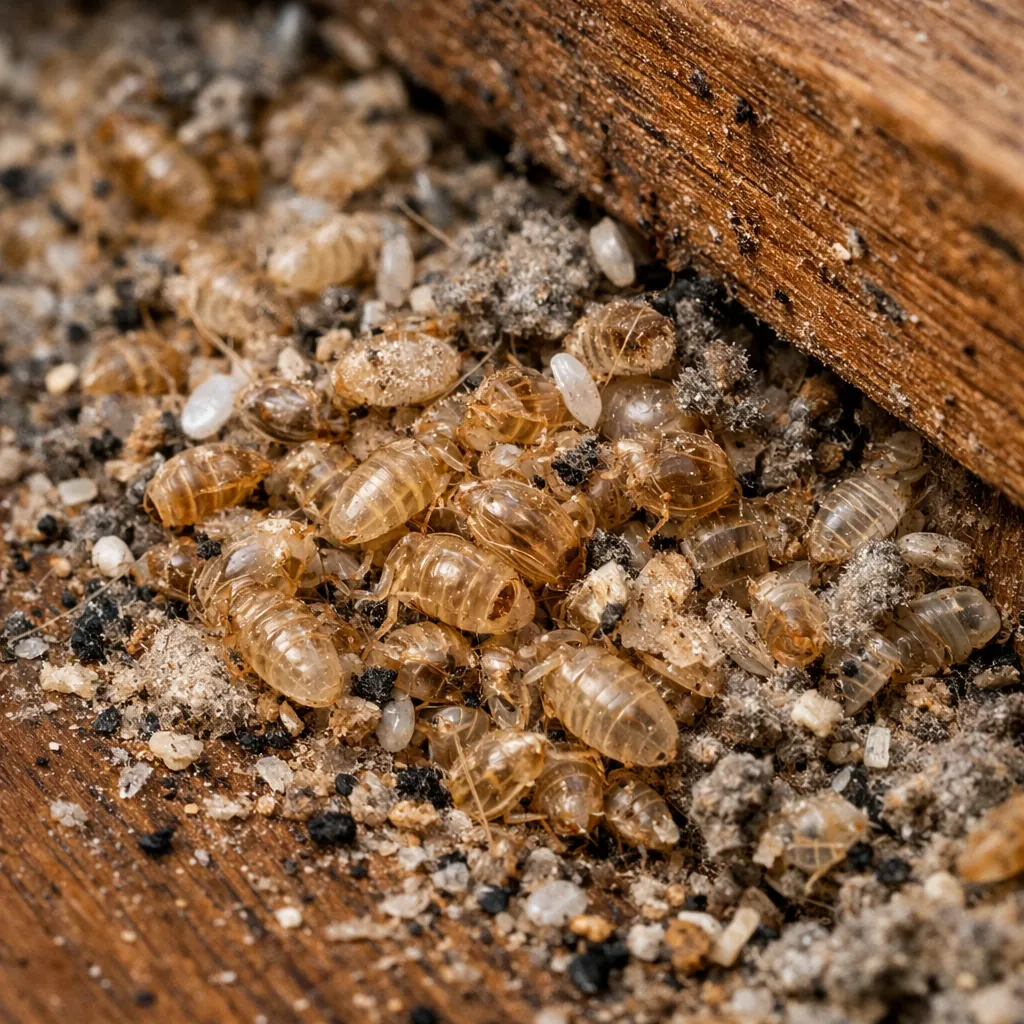
The number and condition of casings provide critical severity indicators. Finding 2-5 scattered casings suggests early detection—possibly a single introduced female’s offspring beginning to mature. Discovering 15-30+ casings concentrated in multiple locations indicates an established infestation spanning 4-8 weeks minimum. The most concerning scenarios involve casings found throughout multiple rooms, behind baseboards, or inside electrical outlets, suggesting population pressures forcing expansion into new territories.
Casing age assessment helps timeline the infestation. Fresh casings (less than 1 week old) appear translucent with slight shine and remain flexible when touched. Casings 1-4 weeks old become more brittle and develop slight discoloration. Very old casings (months) fragment into pieces, appear gray from accumulated dust, and crumble easily. Finding predominantly fresh casings with few old ones indicates recent population growth, while mixed ages throughout suggest long-term, established activity. The presence of both complete casings and fragments together typically indicates a mature infestation with multiple generation cycles occurring.
For comprehensive bed bug shell identification including exoskeletons, egg shells, and molt patterns, see our detailed bed bug shells and casings complete identification guide covering all evidence types, their significance, and professional assessment techniques. This resource explains how different shell types combine to reveal infestation history and severity levels. In many cases, people first become suspicious after noticing shells left behind in sleeping areas before understanding what they mean.
Have Evidence Photos?
Armed with this expert understanding of casing identification—from the translucent 1.5-4.5mm size ranges to location clustering patterns and age indicators—you're ready to verify your findings. Upload photos of suspected casings, their locations, and any quantity clusters to confirm bed bug activity.
- Are Bed Bugs Ever Black? The Real Color Range + What ‘Black Bed Bugs’ Usually Are
- Bed Bug Color by Stage: Eggs → Nymphs → Adults (Exact Sizes + Colors)
- Before vs After Feeding: Why Bed Bugs Change Color (Tan → Red → Dark)
- Can Bed Bugs Be Green or Orange? Not a Bed Bug — Here’s What It Likely Is
- Tiny Red Bug in Bed? When Bed Bugs Turn Red (Fed Nymphs vs Look-Alikes)
- White or Translucent Bugs on Mattress? Eggs, Nymphs, or Shed Skins Explained